Saturday, May 02, 2009

Blogging Against (Dis)Ableism Day 2009

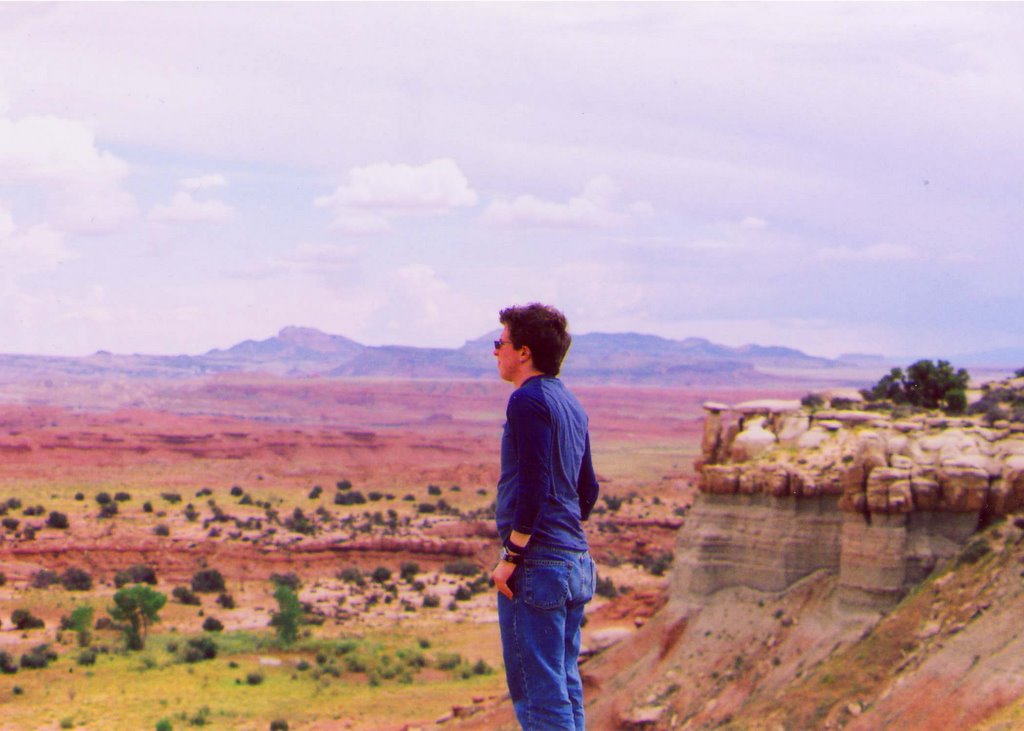
Frida and Jay lobbying in DC Hmmm, it seems I haven’t blogged on this blog since last BADD. I have actually been writing/arting about anti-ableism in other venues:
Welcome Ministry blog

Facebook profile

Flickr photostream

Now, even on Twitter (although I’m challenged by limiting anything to 140 characters!)

As I'm really short on time this week, since I've been in DC and am preparing to preach on Sunday, here's a hasty photo commentary on ableism in this year of my life.

Photo of two coupled pigeons, one with amputated toes
Pige
ons can look past ableism in sexuality—why can’t humans? Sins Invalid sounds like absolution, and it is in a way for the ways in which we limit our own and others’ sexuality by ableism, and what it means to claim it back.
Jay presenting to Wartburg College Sexual Ethics Class
I am learning more and more that when I present about any oppression, that without a broad anti-oppression framework I wouldn’t be doing justice. Bishop Emeritus Stan addresses assembly
One of my mentors, above shown continuing to work through retirement with Alzheimer's reminds me that ageism and ableism are equally damaging in limiting many people’s older lives.
Drawing of a disabled feminist as a mural suggestion at a conference at herchurch
We can all get so caught up in single-issue organizing that anti-ableism gets lost, especially without actual bodies reminding us of access needs.
Volunteers at the Welcome Ministry, some with various disabilities
I work at the Welcome Ministry, where we are blessed with volunteers and community members with a variety of disabled experiences. I’ve learned to use a lot of self-disclosure, because so many people have no idea how it’s possible to create policies and climates that minimize disablement and accommodate for individual disabilities.

Pastor Megan eats and chats with guests at the Welcome Ministry Community Dinner
In working with this community, I am reminded that one of the most disabling aspects of ableism is the all-encompassing vice grip of the kind of ableism that says “you’re not disabled, you should be able to do things like everyone else,” in the face of real differences that could be easily accommodated, and “you’re too disabled to do anything,” stopping people from trying. Add layers of ageism, classism, poverty, racism, multiple layers of trauma, and other oppressions, and people get blamed for the disabling impacts of society on an oppressed body.

Signing Trans Marcher
I find myself missing my disability rights and anti-ableism communities in other cities. I’m not sure how much of this is a lack of community (I suspect a lot) and my autistic introversion that leaves little energy to seek community while doing people-heavy work. I find it exciting to run into people in other communities who seem to be participating in Deaf/disabled worlds.

Market Street public bathroom- accessible, free, and scary
Bathroom access is a huge issue in San Francisco. The homeless/poverty community is often without access to bathrooms, and finding an accessible bathroom (if you can find an accessible building) in the city is daunting. I’d been warned about how bad access is across the bay from the start of the Disability Rights movement seems like another world.

Introducing rescue dog Frida!
I had been looking for a program to get a service dog for a great long while. My disability access needs don’t fit into the established categories, one of my disabilities is being really allergic to most dogs used in service dog breeding, and I’m an adult who has very different needs than children in autism dog programs. I looked for a training program locally, and again found lots but none that were willing to work with a dog for a combination of crowd-avoiding and doorjam-sparing mobility, sensory integration, fetching, and medical alerting. Eventually, we decided to find a rescue dog so that we could fill the animal void, reduce stress, and give someone a home. I was hoping but not expecting that a dog we might find could be self/professional trained for service work.
So we adopted Frida, a scraggly muttish dog who had been found wandering in the Central Valley and was not wanted by her previous family who’d adopted her from a humane society. She turned out to be an exceptionally well-mannered beautiful adult Soft-Coated Wheaten Terrier with some training experience. Frida ready for work, practicing a down-stay under my desk
I started training Frida, and found she was a fast learner and motivated. I looked for a trainer, and kept running into a combination of weird needs with ableist (or at least specific in unhelpful ways) responses to inquiries about professional training assistance.
We found our way to Darn Far Ranch Professionally-Guided Owner Trained program. Their philosophy about most dogs and most people being able to handle service work with the right tools has been empowering, Frida has been working hard as a Service-Dog in Training.
Bus Stop Sit-Stay
Pastor Jay prepares for church Pharmacy Frida working at church

Working with a service dog, as a person with often-overlooked disabilities (apparent if people pay attention, but usually misattributed), I’m reminded of a lot of subtle internalized and external ableism patterns:
-Youth
+ apparent fitness=*not disabled*, despite other evidence (I see this as tied to youth oppression and ageism)
-If it isn’t p
hysically apparent, it must not be *real* (even if it is actually physically based) -Psych impairments are so oppressed in our world where “crazy” is a casual descriptor. While autism is not really a psych disability but a neuro-developmental disorder or different sensory processing, I feel responsibility not to refute people’s perceptions of me as having a psych impairment. It’s a challenging (and probably mostly misunderstood) line to question people’s prejudices about psych impairment without claiming an experience I do not have. -A really cute dog of an unusual breed with a trainer that looks like me *must* be training the dog for someone else. When people don’t know how to respond appropriately to service dogs in general and then think that the dog is being trained for someone else, really weird interactions ensue that my aspie brain has difficulty following, especially because my language processing gets most affected when I’m in crowded social situations.
-I am reminded daily of the enormous amounts of privilege that I draw on to use a service dog: -Having a job (in the city where I live one cannot afford ¾ the rent for a studio apartment on SSI)
-Having a job that pays sufficient to afford a dog and training

-Being able to choose to live in a building that allows dogs, or that understands Fair Housing law

-Working with an employer that chooses to accommodate my disabilities despite not being under the ADA or other laws of non-discrimination
-Passing privilege, even though it doesn't match with my identity as disabled and genderqueer
-Having a stable enough work and housing situation to maintain this

-Working in a job which prioritizes working for legislative and anti-oppression changes

And that leads us to the lead photo. Frida, Pastor Megan, and I were in Washington DC this week with the Transgender Religious Leader’s Summit and National Center for Transgender Equality Lobby Day. We lobbied for passage of the Senate version of the Hate Crimes Bill, which if passed by the House will be the first federal law to specifically protect any rights of transgender people. Granted, the rights of being protected if we’re attacked or killed is not even much of a starting place, but a law that names ableism with trans and sexual orientation discrimination in hate crimes is still a chance to educate systems about some of the ugly realities of oppression.

We ran into other Lutheran & ecumenical pastors, deaconesses, and church members, as well as lots of people of all (and no) faith traditions lobbying to end poverty, ADAPT protesting and lobbying for the Community Choice Act, and the opening of the Sojourner Truth memorial bust. It feels like a new day is coming. I'm encouraged that some of the Welcome Ministry community is learning about their rights, figuring out how they've been disabled and how to access accommodations, and unlearning the lies they've been told about themselves and our charity-model based disability & poverty service systems.
Legislative and cultural changes aren’t the end of oppression, but they feel like a beginning. Frida agrees. But she says next time we’re in DC, she wants to protest with ADAPT
.

Friday, May 02, 2008

Blogging Against Disablism Day 2008


Blogging Against Disablism Day, May 1st 2008

Ableism, Homelessness, Jail, the Church, & Privilege
I feel like I could say a lot about my observations of ableism in the last month of working with long-term homeless and hungry people who all experience ableism, corresponding with a friend who is serving a federal sentence in an IL jail for her actions protesting the SOA (interesting link in even the sentencing and ableism), sharing our work and space with organizations that haven't thought much about disability beyond the elevator that you need a key to enter, and even more having recently been to a large conference and church assembly with a lot of glaring ableism. Currently I'm working on some resources to share with a senior center about the connections between ableism and ageism, much of which I've gleaned from conversations observing the center and church, which I hope to post when finished. Hmm, maybe I can try to make this a BAD Year with all of this ableism material.

Expanding on last year's post, here are a few new signs of hope...
Mia Mingus accepting Creating Change award video, and the text of her whole speech including the parts where she calls out the ableism we were experiencing

Eli Clare's new website

Ballasexistenz returned after restoring the blog from back-up, and posted for BADD.

At the Autistic Spectrum Flickr group, we've been collecting Autism Pride photos...slowly, but there are some fun ones.

On the disability culture front, Ouch! podcast continues to entertain us while washing dishes or driving from Minnesota to San Francisco.


Yet to unpack
Sorry to all that this post is really just a few links, and that I haven't posted since last Blogging Against Disablism Day. I'm excited about my new job and move to San Francisco, and am just trying to tame the chaos to not-so-overwhelming levels for our aspie-addy household.
Hopefully that means I'll post again before Blogging Against Disablism Day 2009!

Tuesday, May 01, 2007

Blogging Against Disablism: Hope

Blogging Against Disablism Day, May 1st 2007

The thought of blogging about Disablism (Ableism, in my usual language) today seems a bit overwhelming. Instead, here are some signs of hope.

Hope, originally uploaded by Transguyjay

I have hope against Disablism when I see:

-Parents and kids working against Disablism, like Norma Desmond & Knight Lloyd (My favorite of their collaborations is Gifted with Asperger Syndrome)

-A person pulling me aside saying, "I've been thinking about what you shared, and I think that I might identify with neurodiversity***." Second moment of hope when the person identifies publicly. I've seen it happen twice this month alone.
***variations include Autistic Spectrum, Disablism/Ableism, or Scent-Free Spaces


-A person comes to my office for advocacy, and self-advocates to make a change in their own life.

-My partner says that he loves how Aspie I am when I am talking non-stop about Star Trek, making laser noises, rocking about something unjust that I just saw happen, standing on my head, or singing along with completely different notes to a different rhythm.

-At the churches I attend where I see persons with developmental disabilities participating in music leadership, invocation, hospitality, reading sacred texts, and greeting without being limited, or patronized. On Easter at one of the communities, we saw an exceedingly joyful liturgical dance to a gospel song by a young person with Down's Syndrome, which the congregation clapped along to.

-Intentional efforts towards community building of disabled people, such as
Breaking Isolation, Building Community at FORGE Forward Conference

-In a meeting or a social gathering and someone corrects their own Ableist statement. This week, it was a friend/colleague who questioned using the word lame.

-A young person from my former internship site is sharing her excitement about getting a new arm with people who were feeling sorry for her.

-The following blogs/sites:
Pitbull Poet
Ballastexistenz
Chewing the Fat
Ragged Edge Online

-Progress in searching for Anti-Ableism resources for work and finding more and more new good resources every day.

-The person I've corrected when repeatedly saying handicapped with a look of concern finally spontaneously says disabled without grimacing.

-My friends gather for Wednesday breakfast, and we vent about the Disablism we've experienced and seen, challenge our own internalized Disablism, and support each other in living with Disabled Pride and hope.

Feel free to add more examples in the comments.
I'm going to bed so that I can get to breakfast in the morning.

Sunday, October 29, 2006

Chaos

Photo of Jay's Grandma's plaid chair

Life has been chaotic lately, explaining the lack of posting in the last few months.
Moving across the river has been exciting. Where we're living is great, although we're just now finally getting completely unpacked.

Grandma had a stroke and has aphasia. Grandma also has post-polio syndrome, and has arthritis and a blood disorder, so she's taught me a lot about living with disabilities.
The process of walking through this with my family has been illuminating. Lack of information on part of medical staff, lack of technological familiarity, ageism, ableism, and other people's unmanaged/unacknowledged disabilities converge in a very different situation for people over retirement age who experience disability. It's the same disfunctional societal systems, but amplified and hidden.

I've been working as an Individual Advocate at a CIL for the last few months. Work is very challenging. I love being able to work with people's disability advocacy requests, especially when I'm teaching skills, facilitating communication, assisting to resolve conflicts, or showing people how to get through the system. Yet, it would be so much more effective if I didn't spend hours on the phone just waiting to talk to the hostile case worker or SSA. We're understaffed too, along with the dilemma of getting more referrals when you do a good job. But it's amazing to see things get resolved that seemed overwhelming and impossible. Yet, some of them don't, and I'm frustrated and angered by the lack of services/support that some people get left with. I can hope that they learned some self-advocacy skills in the process, and maybe one of the referrals I gave might have some better ideas, but ultimately there are still millions of people that are living without control over basic life decisions.

My new favorite blog:
Chewing the Fat

Thursday, July 13, 2006

What I'm absorbed in at the moment...


Absorbed in reading these books:


Absorbed in watching:

Absorbed in listening to:

Monday, July 10, 2006

More from Seward Breakfast

Photo of Galen at breakfast at the Seward Cafe, eyes almost closed

Photo of Robby at Seward Cafe, head resting on hand with eyes closed


A few more from Seward Wednesday Breakfast last week.
They must have been tired.

Summer

Photo from weekly breakfast at Seward Cafe, with food, elbows, and a newspaper on the table

Summer has been busy. Take a look at photos from recent events
at Jay's Flickr site.

In other news, I've completed my 3-month temporary job, and
am applying for another temporary job as well as for a
Chaplaincy Residency starting in September for 9-12 months.

Monday, May 01, 2006

Blogging Against Disableism


This Blogging Against Ableism post is devoted to challenge patronizing people with disabilities. In my experience, it's one of the more common and typical manifestations of (dis)ableism, and also one of the most slippery and insidious. How can you check an attitude anyway? Yet, as far as abuse of power, the dismissal of someone is a major action.

Blogging Against Disablism Day
I define patronizing as:
Treating someone as if you think they are dumb, pedantic, annoying, or otherwise less valid of public contribution and participation. Behavioral examples include eye rolling, private looks of condescension, dismissing, erasing, cutting off, babying, or otherwise invalidating.

I kept returning to this idea of posting against patronizing, and kept talking myself out of it. What about the ways in which many people with disabilities are systematically oppressed as among the most poor, least employed, and least educated in the world? What about the ways in which our "social security" systems lead people away from contributing to society and trap people in poverty? Globally, what about the lack of even basic access to health care and sanitation, to basic mobility equipment and medications?
What about the ways in which psychiatric system survivors are among the most frequently homeless, due to the decentralization and then unfunding of support services? Patronizing just seems like such an unimportant issue. Who cares if we get patted on the head or treated as children occasionally?


Well, why is it exactly that people with physical, communication, intellectual, and psychiatric disabilities are undereducated? It could be that the educational systems have systematized patronizing by undervaluing, underfunding, and underestimating students with disabilities.


And why is it that people with disabilities are more often than not un-employed or under-employed? Just thinking of a few friends, I can only guess that discrimination based on appearances and prejudices outweighed the Masters degrees, years of professional experience, and demonstrated competency had something to do with an attitude of patronization. After all, even if someone with an obvious disability could do a challenging job, it surely couldn't be as good or beautiful as anyone else, and wouldn't the customers question the business's competency then, too? It's interesting that bosses and HR departments' patronizing have often been inaccurate when people actually have the chance to interact with customers and do the jobs.

The de-institutionalization movement was probably a good thing, but as community services were never funded enough to fully develop or to be sustainable, people were left without services or options. So the jails, hospitals homeless shelters, and streets became the institutions. But what could we expect from psych survivors? Perhaps if our patronizing attitudes didn't write people off as hopeless failures, we would see the injustice in these broken systems.

Patronizing can be babying, bullying, or talking down to someone...
but it can also be violating another person because we can't quite see them as fully human.

My own experiences of being patronized are memorable but limited. When I am patronized for looking too young (as an autistic FTM) or too autistic (which is sometimes misread as intellectual disability, anxiety, psych disability, or even younger age), I have the privilege of opening my mouth and quoting theory or showing diplomas, and I have the skin color and class markers to back up my claims along with the privileges of medical care, technology, and diagnoses. But what would it mean to use this privilege in a way other than simply showing that people were mistaken in their categorizing of me as one of the patronizable ones? I've often gotten angry not that my characteristics were misread, but that there was a different way to treat people based on how we are viewed. Yet, I must say that in the moment, I don't know that I've ever challenged those assumptions in a more universal way.


As my blog title alludes, I am a postmodern Lutheran who believes myself to be a redeemed sinner in a broken but re-creating world, made whole by the love of God shared through other people. So when I confess my own patronizing when I feel annoyed or bored by someone else, usually having something to do with disability (my own, theirs, or both), I am both taking responsibility for my own part in it and acknowledging that our world is one where the brokenness of patronization and corresponding devaluing of people is endemic and also in need of repair. With that, I pledge to attempt to check my own patronizing.

Here are some ideas of how I intend to challenge to act of patronizing:
  • Find and express ways that all contributions are valid and important, even those that seem impractical or simplistic, overly-emotional or naive
  • If nothing else, what one person voices is an indication of their experiences
  • Take the time and effort to listen critically to ideas that seem strange, pedantic, or simplistic
  • If behaviors or ways of being are annoying, dull, or odd, have a direct and respectful conversation with the person to find ways to work out understanding and respect
  • Call out and stop the patronizing of others
  • If all else fails, try to save eye rolls for alone time
Anybody have more experiences to share or ideas to challenge patronizing?

Sunday, April 30, 2006

Get ready for "Blogging Against Disableism Day"

Blogging Against Disablism Day

Reminder- if you haven't seen the call from Diary of a Goldfish, get ready for Blogging Against Disableism Day on May 1.
I've been investigating, and it appears that Disableism is the British equivalent to Ableism. Ever want to join in an international direct action?

Some good ideas to get you motivated:

Wednesday, April 12, 2006

Jay's Theory of Autistic Theory of Mind

Photo of Jay's reflections in a number of different glass frames
The "Theory of Mind" as lacking in people with Autistic Spectrum experiences has bugged me for a long time. I figured out why awhile ago, and have worked on it long enough to figure out how to say a preliminary statement of it...

The Development of Lacking Theory of Mind
A young kid with AS thinks differently because their brains are wired in a different way from neurotypical.

But, being in neurotypical (in this example American middle class) society, where a common belief is that "everyone is the same," and where being different than the assumed norm/ideal is pathologized as being wrong or sick, the child is told over and over again that they think like everyone else does, and should act like everyone else does.

When the kid tries to explain the differences in experiencing and thinking, (assuming that the kid realizes the differences, can make sense of them, and can explain them to others, which is a stretch for even the most able of AS kids) they are told over and over again that they are just like everyone else thus and should act, think, and cope accordingly.

But the truth is, the sensory experiences and thought patterns, emotional and social processing are NOT the same as everyone else.

So then the person encounters other people, and misreads what they are feeling, thinking, or meaning by projecting their own meanings, because the only frames of reference are:
-their own experience
-the uniform assertion that their experience is identical to that of other people

Therefore, AS kids are trained to become adults who project atypical sensory/thought/perception/feeling patterns on others, not entirely because they intrinsically lack the ability to understand other viewpoints, but at least partially because they have been taught to think that what they are experiencing is the same as what everyone else is.

While I do think that one of the differences in experiencing/processing has to do with understanding socially-relevant cues, I think that this is overemphasized and that many of the methods use to normalize AS people actually lead to greater difficulty in Theory of Mind rather than lesser.

Wouldn't it be a more effective strategy to figure out what a person is experiencing, honor and validate that, and give tools to better understand others? For example, I learned about how to correctly interpret body language (by ASKING what it means without assuming) in MSW school--but this is clearly not a Masters' level task.
A preschooler with limited language can learn to ask "What does that face mean?"

All of this depends, of course, on the recognition and valuing of difference. The cultural value of denying difference in a misguided effort to force unity is a Modernist construct, but it's so deeply embedded in American culture that deconstructing it seems to take enormous effort. It's exactly why Disability Culture doesn't make sense to most people, why Queer Pride seems offensive, and why Christianity has been publicly limited to politically-conservative consumerist moralism. (Enough about that, or this post will never end...)

Some great books about Neurodiversity:

Monday, March 13, 2006

Questioning Organizations' Movement-Labeling

There have been some posts to the Trans-academics list, also published at Intersex Pride regarding the variety of ways that people identify/don't identify as intersex, along with frustration regarding the uniformity of some of the organizations' choices and explanations.


One of the issues raised is a concept that I've been working with for a few years, but doesn't seem to have caught on broadly- not erasing the identities of people who identify differently. That means, not saying that there is only one way to identify as X or only one meaning for the identity of X, or alternatively, that to identify as X is different from Y (OK so far) because X is just [insert insulting stereotypes here]. (Some day, I'll look up the references to "not erasing" and list them here). To me*, it seems that intersex communities have a dilemma when it comes to not erasing: how to have the identity mean something different from trans about specific bodily/medical-related experiences, while not erasing anyone within the intersex community who uses the term as an identity marker. In my expereince, this is at least partly in response to some transgender people who feel that their own gender variance is biologically-based and want to idetify as intersex as a means of legitimizing this. While self-labelling and not erasing seem to be in harmony, in this case they may be in conflict, given that someone without the experiences of bodily sex difference and/or medicalization of that difference does not share the experiences of intersex realities, and thus the choice to self-label as intersex by a person without such experiences erases those experiences in using the label.

*The intersex discussion is outside of my own experience. However, the whole discussion seems to closely parallel the ways in which communities of autistic spectrum people have chosen to identify as autistic versus using the person-first construction common in much disability-rights rhetoric. The link above also has articles on responses to organizations that deny autism as an identity, of varying degrees (uncanningly parallel to how there is disagreement within the intersex community not only regarding medicalization/"cure" of intersex, but also disagreement regarding some org.s of people with intersex that limit how intersex is used as an identity).

It's complicated, because the idea of not being a thing that you have not freely chosen, such as medically intersex or neurologically autistic should be a freedom of self-definition (you can choose whether to use a diagnosis as part of your identity or as an external imposition). Yet, the danger in overemphasized this freedom is to disallow people who do claim what has been pathologized as a positive piece of personal identity. So, while I'm generally in favor of referring to others in groups or individually as "people with autism" or "people with intersex conditions," it is equally respectful to use "autistics" or "aspies" if someone/a group asks to be referred to as such, or to use "intersex people" if someone publicly identifies as such.


Part of this whole discussion also rests on the Social Model of Disability discussion. *BIG Caveat- I am not referring to intersex physical/medical realities as disabilities. Some intersex realities are intertwined with other disabled realities, which is also not my point here. Rather, the medicalization and pathologization of intersex bodies seems to closely resemble the ways in which physical/cognitive/emotional variations in humans have become a means of social marginalization. More information on the Social Model of Disability:
ILRU Disability Timeline Analysis
Disability, Identity, Difference
ILRU Youth Training Manual- see pages 13-14


The conflict should not be that there are differences in self-understanding and experiences of similar characteristics, but that there are universal statements made in this. This reminds me of a dialogue at a place where I worked with co-workers of many disability experiences/identities. Some of the workers/people requesting services referred to themselves as "quads" or other such terms, including "crips." Others were offended by this, and asked the people not to use such terms for themselves. Having grown up stating repeatedly that I was not "a diabetic" but a "person with diabetes" (which is how I continue to identify this part of myself), I understood the disability rights implications of humanizing people with disabilities versus pathologized identities. Yet, the piece of deciding for oneself which terms someone wished to use made sense to me too.

As an adult, I've been comfortable identifying as autistic or an aspie since I figured out that piece of my identity/experiences. But I still don't identify as diabetic, even though experiencing diabetes has been a large part of my worldview. I identify as a transguy and to simplify at times, an FTM, but those are about the only words I'll use as nouns for myself. Queer and transgender, genderqueer and "bisexual" when necessary, I do not use for myself as nouns. They are parts of my identity, but adjectively so. I don't feel a need to use "person who is genderqueer," but "a gender queer person" is sufficient.
I think this question is bigger than it seems.
  • How do we integrate parts of ourselves which have been pathologized into our identities? Must we?
  • What difference does it make how our experiences are dealt with, and what exactly those experiences are?
  • What is the difference between describing an experience/identity piece with an adjective versus objectifying it as a noun?
  • When and how is it important to stress the humanity of people who have been dehumanized, versus when is it important to reclaim as positive identities the dehumanizing oppressive slurs?
  • How can we build communities that allow for self-labeling, while claiming some common identity or experiences? (Perhaps the One Community Pledge is an example of attempting this)


  • What difference does it make to frame something as an experience versus identity-marker?

    I've thought about this a lot regarding so-called invisible disabilities versus more typically apparent disabilities, and it seems to me that there is frequently a social need to downplay apparent disabilities and alternatively to assert less-apparent disabilities. This seems to me to be related to how people with disabilities choose to self-identify. Yet, in my experience, this is only a partial factor.


    Any thoughts? Especially from people who identify as intersex?

Sunday, March 12, 2006

Post-Covenant -Service Trip


I posted our post-covenant-service-trip photos. We had a nice time in Wausau, brief but free.


I'm back looking for jobs, volunteering for orgs, and taking photos.
I'm looking to start selling some crossword puzzles, buttons, t-shirts, and/or photos, whichever I get going first.

Monday, March 06, 2006

Human Resources?

Clean desk


Jay's desk, neatly arranged I've been doing a lot of applying for jobs lately.
Some of them are long-term-career jobs, and others are short-term-until-then jobs. I've noticed some inconsistencies within the world of Human Resources.


-The human resources that are particularly valued by the Human Resources departments tend not to be all human resources, but particularly those that are phrased "excellent social skills" or "excellent interpersonal communication," which I'm told means neurotypical communication styles and a chatty, extroverted demeanor. Clearly, some jobs like international diplomats or business people working with typical middle-to-upper class clients, may truly require as a job qualification the ability to small talk about nothing without seeming strange for long periods of time, but it seems odd, culturally limited, and ableist to me to require such skills of computer programmers, short-order cooks, or library aids.
Both Temple Grandin's writings on job interviews for people with autism and M. Evan's Why Disability Rights Aren't Enough note that it is discriminatory toward people with autistic experiences to be interviewed by HR departments that are seeking neurotypically-social candidates for technical or professional jobs, although even low-skill jobs often require more typical "social skills" to get through the interview than to do the job.

-While every career professional and job prep. book/website I've seen says that the applicant must firmly insist on calling within a week for an interview at the end of the cover letter, I've found that both workers in the field that I've asked for feedback and the people to whom I am applying seem not to like this. Perhaps this is different with academic/ministry/social work jobs than business jobs.

-I've found that while deadlines for application are typically firm (although occasionally first-come-first-serve), the deadlines for informing candidates are flexible to nonexistent. At first I was merely annoyed by this, but I think this could be viewed as the power of the HR/search committee being displayed in delaying notification without notice, and not calling or writing if the applicant is not chosen.

None of these things should surprise me, given the social experiences of neurotypical privilege, classism/racism, ableism, and the structure of the business world.
It's odd to me, though, that when applying for jobs where part of the requirements are to be able to relate to academics, pursue and publish high-level continued study even though you don't really get paid for it, or to develop good working relationships with people with disabilities/"diverse populations"/people living in poverty, that middle-class white anti-academic neurotypical socialization standards should be used as criteria for job applicants.

Tuesday, February 28, 2006

Unwritten Rules

(description below)Visual Metaphor for Autistic Perception
This is my attempt at a visual metaphor of autistic perception. When I was driving today and noticed that the thick snow had covered most of the roadsigns, I was thinking about how the social world seems like that in autism. We may know there are rules, but can't make out what the details are, or are looking at the wrong side of the sign, so end up either breaking the rules, applying them too strictly, or misinterpreting. Personally, I learned what the signs said through books and role plays at social work grad school, not through intuition or being able to see through the snow (kind of like how my memory of what the road signs said got me home without speeding or running over pedestrians).
The colors and brightness are like the sensory sensitivity and distortion.
And yet, it's kind of beautiful and strange, kind of like our sensory experiences can be and we can be, if our social environments are open to our different perceptions rather than expecting we follow the signs we see differently.
It's interesting to me what details pop out- the trees, the brightness of the snow, the glow...


Unwritten rules...like the signs that are covered in snow...

Today I was kicked off a flickr group for not following the rules that were not posted. I looked for the rules, and I looked at the photos to try to figure out the rules for the particular group, but:

1. There were no rules posted.

2. The rules that were cited when the administrator contacted me were not
followed by the administrator himself when posting.

I'm upset by this, not only because I wanted to be a part of this particular group, but also because I spent half an hour looking for and trying to figure out the rules so that I could follow them. Then, in removing my photos, I realized that (other than not flooding photos, which could be debatable whether I was doing), that I was indeed following the other rule, and that the administrator himself was not. Further, rather than posting the rules in the first place and then warning people who don't comply, the only and first step was to remove me and then send the rules I'd overstepped.

Such is Aspergers life. The freedom not to follow unwritten rules, the creativity to make our own rules, the ability to not care about pointless/social rules are wonderful gifts. Yet, rules give us a bit of calm in the chaos, and many of us are driven to intense loyalty to rules that are important and boundary-clarifying. And the way many of us make it through social interactions is by stricter adherence to rules, or being consciously aware of what rules we wish to break and the potential consequences. Yet, to be aware of the rules, we must either have figured them out or have been told them, which is difficult when neurotypicals maintain "there are no rules," even though they know and follow them, and insist that we do as well.

People often ask how I can be, or even want to be, a social worker and pastor-candidate. I have, thanks to my internship supervisors, people I've served, and professors, a long list of reasons why someone (in particular me) with AS perceptions can be good people-workers. I just thought of another, however--
Pastors/social workers are rule-setters and enforcers, & freers of others from rules.
This brings not only the power for abuse, but also power to empower and free from self- or society-imposed restrictions, as well as to set healthy boundaries and rules for healthy community engagement.

In social work methods classes, we learned exercises and techniques for making systemic rules explicit. While most important in working with families and systemic change, this is important at all levels including individual. So the autistic need to be explicit about unwritten rules is a social work technique...

Ministry has been a bit more challenging, because the expectations are more super-hero like, vary from person to person, with generally unhealthy-to-contradictory guidance from national/local systems. Being an oozing extrovert is seen by many as being a good pastor,even when situations call for listening, restraint, and more distant boundaries. But what do church planters and conflict resolution experts recommend for healthy congregations? More explicit rules, clear guidelines, and making church as socially safe as possible.

Unwritten rules are often a form of power abuse and social control, disguised as freedom from rules.


More ideas about rules and autistic experience:

Tuesday, February 21, 2006

Passing, Visibility, and Privilege


I've been thinking a lot about passing, privilege, and visibility lately. I was just re-reading Cal Montgomery's presentation from the Queer Disability Conference in 2002 from the panel (In)Visibility, Recognition, and Marginalization: Queers with Non-apparent Disabilities titled
Tangled in the Disability Cloak. It reminded me of Eli Clare's essay "Flirting with You: Some Notes on Isolation and Connection" from:


is the second book, also by Clare, which also begins to dive into these questions. If you're new to queer/trans and postmodern identity thinking, it's a poetic and engaging place to begin.

Here are some of the personal questions I've encountered regarding passing, visibility, and privilege. They really are questions, although some of them sound a bit like complaints, I'm more perplexed than bothered (although I am bothered by the inequalities and oppressions that cause people to experience the need to justify or assert identities versus stereotypes or prejudices) :
-What does it mean to pass as a man (particularly a white middle class man)
when I identify as genderqueer?
-When I'm read as a woman, why do I get annoyed if I identify as genderqueer and passing as a man isn't my goal?
-I often am read as a gay man, but I don't identify as either gay or a man, although I do identify as a queer transguy. Why are people intent on simplifying my identity wrongly when I correct people who should know better?
-What are the advantages and disadvantages to passing as neurotypical?
Aspergers is rarely read as autism, more likely misread as cognitive disability, typical anxiety/nervousness, oddness, coldness, or other misreadings--when passing as neurotypical, I find I'm more likely to be misread than not.
-What does autistic visibility even look like? Is being out verbally really visibility?
-What does it mean to be read as cognitively disabled when I'm not, and how do I use intellectual/educational privilege to deny this when it occurs?
-In using an insulin pump, diabetes is more visible than without, but less impairment-causing.
So according to the Social Model of disability, it's then more socially disabling to use an insulin pump and be more healthy than to not and be less visibly disabled.
-I often am read as a gay man, but I don't identify as either gay or a man, although I do identify as a queer transguy. Why are people intent on simplifying my identity wrongly when I correct people who should know better?
-If I actually manage to be perceived as I see myself in disability, then why is it that sexual identity or gender identity (or race, class, profession, religion, etc.) is considered to be even less complex than it was by itself? For example, all autistic people are assumed to be asexual (or occasionally hypersexual), but always in a straight way. And despite the theories and evidence that nonstandard gender identities are prevalent in people with autism/cousins, there is almost nothing written about it? (Perhaps we can blame ABA for brainwashing "proper" gender behaviors).

Of course, there are several interlocking answers to the rhetorical questions:
-Internalized and external oppression
-De-sexing of people with disabilities
-Medical/charity model of disability
-Pathologization of gender variance
-Homophobia, heterosexism, and transphobia
-Oversimplifications in modernity/modernism clashing with postmodern realities/identities

But this just leads me to deeper questions:

  • Why is passing so complex?
  • What do we loose by passing?
  • Why is invisibility desirable in some circumstances (such as when one wants to pass), but generally negative in being erased?
  • What is the price of misrecognition?
  • Borrowed privilege is different than typical privilege, and can both be something we're more aware of from contrast, yet can be less willing to question publicly if trying to pass. How does one responsibly use borrowed privilege, and does that necessarily mean not passing?

  • Being out, transferring power to those with less assumed privilege, and questioning privilege are the two ways I've found the best to struggle publicly with these questions. Yet, in doing so, it means that I spend far more time explaining myself than would be ideal. Explaining one aspect of yourself everywhere you go is a hassle, explaining 5 parts of your identity is impossible. Perhaps I'm getting lost in the detail-orientation of my autistic brain. Or perhaps I'm getting mucked up in postmodern identity questions. Both ways, it is interesting how these questions keep coming up in disability, gender, and sexuality discussions...Perhaps these questions are key in figuring out how to be real people in real communities.

Monday, February 20, 2006

Pictures for profile and links


Images for profile and links


Saturday, February 18, 2006

Cold Front


Glass and Ice
Originally uploaded by Transguyjay.
I posted a bunch of neat icey window photos on my Flickr page today.

Friday, February 17, 2006

Outside Binaries

A few weeks ago, my partner came home from class frustrated. He had asked another classmate not to use "black and white" to talk about dichotomy, noting the racist connotation that black=bad, white=good.
His classmate got upset, and said, "well, what's the politically correct thing to say then?" He tried to explain how it was about being anti-racist and sensitive to the connotations, but didn't immediately have a response to alternatives.
So, here's the list I came up with for other ways to express moving beyond a dichotomy:

* Beyond Dichotomies
* Outside Binaries
* Seeing more than two possibilities
* Bigger than either/or
* More diverse than two labels
* Outside the two small boxes
* Multicolored versus monochromatic
* Seeing the whole spectrum

Any other ideas?

Introduction


I've been thinking about blogging for awhile now, not sure I had the time, energy, or poeticism to be an effective blogger. However, I'm finding information and ideas I'd like to share, but typically do so on scrap paper that only gets to one person.
We'll see how this goes.

Monday, April 04, 2005